The best way to automate accruals and prepayments is to use software that connects directly to Xero or QuickBooks, reads your invoices and contracts, and posts audit-ready journal entries without you touching a spreadsheet. The five tools doing this well in the UK right now are EasyAccrue, Spread, ScaleXP, Gappify, and Rima. Each takes a different approach, and the right choice depends on your workflow, your accounting platform, and how much human review you want to keep in the loop.
| Tool | Integration | Automation approach | Standards | Best for |
|---|---|---|---|---|
| EasyAccrue | Xero | Syncs bills, detects accruals/prepayments, one-click post | Not specified | Quick Xero setup, one-click posting |
| Spread | Xero | Reads invoices and attachments, auto-generates journals continuously | Not specified | Continuous workflow with strong audit trail |
| ScaleXP | Xero, QuickBooks | AI applies IFRS/GAAP logic, generates and posts journals | IFRS, GAAP | Dual-platform teams needing standards compliance |
| Gappify | ERP/accounting systems | AI confidence scoring, forensic audit trail, exception review | SOX, GAAP | Organisations needing defensible audit evidence |
| Rima | Via Slack/email | Fully managed schedule generation, Excel output | Not specified | Teams wanting external delivery with Excel output |
Table of Contents
- How do these accrual automation tools actually compare?
- How to choose the right accrual and prepayment software
- Why automating accruals beats spreadsheets every time
- Ailedger helps you find the right tool faster
- Key takeaways
How do these accrual automation tools actually compare?
The five tools share a common goal but differ sharply in how they get there. Understanding those differences saves you from a costly switch six months in.

EasyAccrue is built specifically for Xero practices. Sign-up takes under two minutes, requires no payment details, and the free guided setup has most firms posting journals on day one. You sync your Xero bills, EasyAccrue detects which transactions need accrual or prepayment treatment, and you post to Xero with one click. The journal format matches exactly what Xero expects. For sole practitioners and small practices that want a fast, no-fuss solution without a steep learning curve, it is the most direct path from spreadsheet to automation.
Spread goes deeper into the Xero transaction layer. It reads both line item descriptions and PDF attachments to detect service periods, flags timing differences, and generates journals continuously throughout the month rather than in a single month-end batch. A seven-day snapping rule handles borderline dates consistently across your whole team. Each transaction gets a confidence status: "Ready" items can post automatically, while "To Review" items are flagged for a quick check. Spread also handles accrual reversal automation when invoices arrive, and covers deferred revenue recognition alongside accruals and prepayments.
ScaleXP is the strongest option if you run both Xero and QuickBooks. It syncs directly with both platforms, reads bills and purchase orders, applies IFRS and GAAP logic via AI models trained specifically for finance teams, and generates structured accrual and prepayment schedules for review before posting. Finance teams using ScaleXP typically save up to three days every month. It supports Xero Tracking Codes and QuickBooks Classes, so cost allocation stays intact across departments.
Gappify is built for organisations where auditability is non-negotiable. It centralises signals from unapproved invoices, expense calculations, and historical patterns, then assigns an AI confidence score to every proposed accrual. Low-risk items are fast-tracked; exceptions get flagged for human review. Every accrual carries a forensic substantiation trail documenting the exact logic and data sources used. For finance teams operating under SOX or facing rigorous external audit, that level of traceability is the point.
Rima takes a different model entirely. You send invoices, contracts, GL exports, and prior period schedules via Slack or email. Rima calculates amounts, populates your existing Excel workpaper templates with source references, and returns completed schedules within a 3-hour SLA, 24 hours a day, seven days a week. There is no direct ledger integration; the output lands in Excel, ready for journal entry and sign-off. It suits teams that want the schedule preparation handled externally without changing their existing review process.
Pro Tip: Before committing to any vendor, ask specifically about onboarding support and what happens when a transaction is misclassified. The best vendors offer a dedicated setup call, clear documentation, and a named contact for the first 30 days. That first month is where most implementations succeed or stall.
How to choose the right accrual and prepayment software
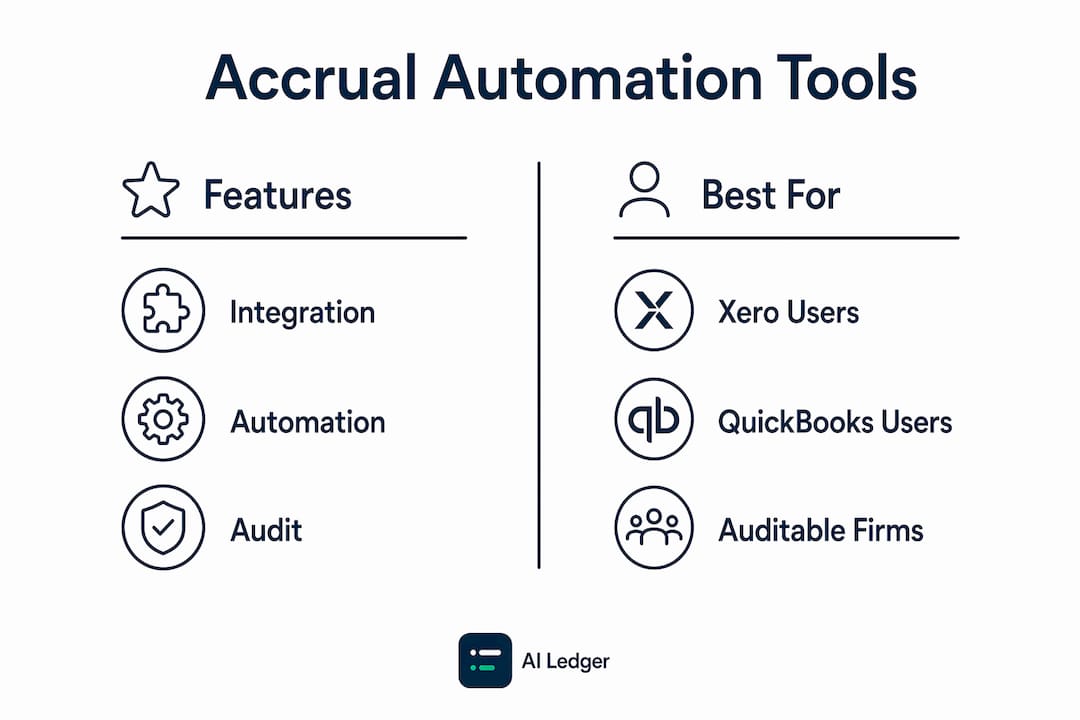
Start with your accounting platform. EasyAccrue and Spread are Xero-only. ScaleXP covers both Xero and QuickBooks. Gappify connects to broader ERP environments. Rima works independently of your ledger. Getting this wrong means rebuilding your workflow from scratch.
Beyond platform fit, the key questions are:
- Accounting standards: Does your firm report under IFRS or GAAP? ScaleXP and Gappify explicitly apply these frameworks. If standards compliance is a client requirement, confirm it in writing before you sign up.
- Workflow completeness: Does the tool handle invoice scanning, period detection, journal generation, approval, posting, and reversal? Partial automation still leaves manual steps that create errors.
- Audit trail quality: Can you trace every journal entry back to its source document? Gappify and Spread both provide this. For practices with audit clients, this is a hard requirement.
- Setup time and training: EasyAccrue and Spread are designed for fast onboarding. Gappify and ScaleXP may require more configuration for complex environments. Factor in staff time, not just vendor promises.
- Trial availability: Spread offers a trial where most firms are posting journals by the end of the first demo call. EasyAccrue's free sign-up has no payment details required. Use these windows seriously.
Cost considerations vary. EasyAccrue and Spread publish pricing on their websites. ScaleXP and Gappify typically require a conversation for pricing. Rima operates as a managed service. For a software evaluation checklist that covers these dimensions systematically, Ailedger's directory is a useful starting point.
On data security, ask every vendor about SOC 2 compliance, data residency (particularly relevant post-Brexit for UK firms), and what happens to your data if you cancel. These are not edge cases.

Pro Tip: Verify that any tool you shortlist has a clear data processing agreement compliant with UK GDPR. A vendor without one is a liability, regardless of how good the automation is.
Why automating accruals beats spreadsheets every time
AI-powered accrual automation cuts time spent on accruals by 80% and accelerates the month-end close by up to three days. That is not a marginal improvement. It is the difference between a seven-day close scramble and a process that is largely done before month-end arrives.
Spreadsheets are prone to missed adjustments that cause balance sheet discrepancies. One formula error, one tab not updated, one person on leave: the whole schedule breaks. Automation removes that single point of failure by keeping the ledger as the single source of truth for every prepayment and accrual balance.
The best practices that make automation stick:
- Connect directly to your accounting platform rather than exporting data to a separate tool.
- Process accruals continuously throughout the month rather than in a single month-end batch.
- Use automated reversal entries so actual invoices clear accruals without manual intervention.
- Review AI-flagged exceptions rather than every transaction. That is where your judgement adds value.
- Keep audit documentation attached to source transactions from day one, not assembled retrospectively.
Automation also standardises how accruals are treated across your entire client portfolio. The same rules, applied the same way, every time. No individual discretion, no knowledge that walks out the door when a team member leaves.
Ailedger helps you find the right tool faster
Not sure which of these tools fits your practice? Ailedger runs a free directory of 45+ AI accounting tools with a side-by-side comparison tool that filters by task, platform, and practice size. You get a shortlist in about 30 seconds, not 30 tabs.

Every Friday, the Ailedger newsletter covers the AI tools and automations that actually matter for accounting practices, in plain English, with no hype. If you are evaluating accounting workflow automation options right now, it is the fastest way to stay current without spending hours on research. Browse the directory or sign up for free at Ailedger.
Key takeaways
Integrated AI-powered software that connects directly to Xero or QuickBooks is the most effective way to automate accruals and prepayments, cutting manual close work significantly and accelerating the month-end close noticeably.
| Point | Details |
|---|---|
| Platform fit comes first | EasyAccrue and Spread are Xero-only; ScaleXP covers both Xero and QuickBooks. |
| Automation cuts close time | AI-powered tools reduce accrual time by 80% and speed up month-end close by up to three days. |
| Audit trail is non-negotiable | Gappify and Spread provide forensic, source-linked trails; confirm this before signing up. |
| Spreadsheets create risk | Missed adjustments in spreadsheet-led workflows cause balance sheet discrepancies that automation prevents. |
| Ailedger directory | Ailedger's free comparison tool shortlists the right accrual automation software by platform and practice size. |