
AI tools for the financial close process are autonomous or semi-autonomous software platforms that use machine learning and agentic AI to automate transaction booking, reconciliation, and financial reporting. The industry term for the most advanced category is the Agentic General Ledger (AGL). These platforms compress close cycles from 5–10 business days to 3 days or fewer, with leading tools achieving 93–95%+ auto-booking rates and 99.6% document processing accuracy. For finance professionals under pressure to close faster and report with confidence, the shift from traditional month-end sprints to continuous accounting is no longer a future ambition. It is happening now.
What features make AI tools effective for financial close automation?
The most effective AI tools for financial close automation share a specific set of capabilities that separate genuine automation from basic workflow assistance. Understanding these features helps you evaluate platforms on substance rather than marketing claims.
- High auto-booking rates. AI-native platforms book transactions in real time against the general ledger, achieving 93–95%+ automation without manual intervention. This directly reduces the volume of entries your team needs to review at period end.
- Machine learning for anomaly detection. Effective tools flag exceptions and unusual patterns as they occur during the period, not after the books are closed. This shifts error correction from a reactive scramble to a continuous process.
- Continuous accounting architecture. Rather than batching work at month-end, AI-native platforms validate and reconcile data throughout the period. This is the foundation of the continuous close methodology.
- Governed AI with embedded accounting logic. Governed AI platforms embed compliance checks, accounting rules, and audit trail generation directly into automated workflows. This makes reports audit-ready by default, not by post-processing.
- ERP integration via live ledger APIs. Ontology-based ERP connectors map your existing data structures without requiring you to rebuild semantic models each period. Native API connectivity is the standard to look for.
- Human-in-the-loop controls. The best platforms give your team final approval authority over exceptions and edge cases. Autonomy and oversight must coexist, not compete.
- AI-native versus AI-decorated architecture. AI-native tools autonomously book entries with governance controls. AI-decorated tools only suggest entries for human approval. The distinction matters enormously for how much time you actually save.
Pro Tip: Before evaluating any platform, ask the vendor to demonstrate its auto-booking rate on a live data set that resembles your transaction volume and complexity. A headline figure of 95% means little if it only applies to simple bank transactions.
Which AI tools are leading financial close automation in 2026?

The market has moved quickly. A clear tier of AI-native platforms now handles the full close workflow autonomously, while a second tier offers strong automation within specific task areas. The following categories reflect the main platform types you will encounter.
AI-native agentic general ledgers
These platforms treat the general ledger itself as an AI-native object. They enforce accounting invariants, such as balanced debits and credits, before posting any entry. This means data integrity is built into the booking process rather than checked afterwards. Pricing for platforms in this category ranges from flat monthly fees around $79/month to free, open-source options for self-hosted deployments, making them accessible to practices of every size.
Standout capabilities include real-time transaction booking at 95%+ automation rates, continuous sub-ledger reconciliation, and native audit trail generation. Open-source variants in this category suit budget-conscious teams willing to manage their own infrastructure. Enterprise-grade versions add SOC 2 compliance frameworks and role-based approval workflows.
Autonomous multi-step close orchestrators
These platforms manage the entire close sequence as a series of agent-driven tasks. They handle task scheduling, exception routing, and reporting deadlines without manual coordination. The key differentiator is their ability to manage dependencies across multiple close steps simultaneously, rather than automating each step in isolation.
Finance teams using orchestrators report that month-end close becomes a review and sign-off operation rather than a days-long data cleanup. The human role shifts from execution to governance. This is the most significant operational change these tools produce.
Governed AI reporting platforms
These tools focus on the output side of the close: financial statement generation, consolidation, and regulatory reporting. They connect to your existing ERP via live ledger APIs and produce reports that are audit-ready by design. Governed AI embeds accounting logic and compliance checks into every report generation cycle, reducing the risk of manual errors in final submissions.
The strength of this category is compliance confidence. The limitation is that these platforms typically require a clean, well-structured general ledger as their input. They do not fix upstream data problems.
Document processing and extraction agents
These tools handle the ingestion side: bank statements, invoices, receipts, and contracts. At 99.6% document recognition accuracy, the best platforms in this category eliminate virtually all manual data entry from source documents. They feed structured data directly into your general ledger or ERP, removing a major source of close delays.
For practices still spending significant time keying in source documents, this category delivers the fastest visible return. The time saved on data entry compounds across every close cycle.
How do AI tools impact accuracy, efficiency, and compliance?
The measurable impact of AI on the financial close is well documented. Close cycle compression, accuracy gains, and compliance improvements each follow from specific technical capabilities rather than general AI hype.
| Impact Area | Baseline (Manual) | With AI Automation |
|---|---|---|
| Close cycle length | 5–10 business days | 3 days or fewer |
| Transaction auto-booking | Manual entry | 93–95%+ automated |
| Document processing accuracy | Variable | 99.6% |
| Audit trail generation | Manual documentation | Automatic, embedded |
| Exception identification | End-of-period review | Continuous, real-time |
AI shifts finance workload from manual execution to oversight and judgment. This reallocation is the most strategically significant change AI brings to the close process. Your team stops being data entry operators and starts being financial controllers in the truest sense.
Compliance benefits are equally concrete. Governed AI platforms generate audit trails automatically at the point of every automated decision. This means your auditors receive a complete record of what was booked, when, and on what basis, without your team assembling that evidence manually.
The primary risk to manage is "truth drift." Continuous sub-ledger activity must reconcile accurately with the formal general ledger throughout the period. If real-time data and the ledger diverge, exceptions accumulate and the close slows down. Clean master data is the prerequisite for avoiding this. Poor data quality introduces false positive exceptions that erode the efficiency gains automation is supposed to deliver.
Pro Tip: Run a master data audit before deploying any AI close tool. Inconsistent vendor names, duplicate account codes, and unmapped cost centres are the most common sources of false exceptions. Fix these first and your auto-booking rate will be materially higher from day one.
What to consider when selecting AI tools for the financial close
Choosing the right platform requires more than comparing feature lists. The following criteria separate tools that deliver lasting value from those that create new problems.
-
Evaluate the architecture first. Determine whether a platform is AI-native or AI-decorated. AI-native tools autonomously book with governance controls. AI-decorated tools suggest entries for human approval. The former saves significantly more time but requires greater trust in the platform's logic.
-
Assess governance capabilities. Look for embedded audit trails, role-based approval workflows, and SOC 2 compliance certifications. Governed AI in financial operations is not optional for regulated entities. It is the baseline requirement.
-
Audit your master data before you start. Clean, structured master data is the single biggest factor in AI automation quality. Standardise vendor names, account codes, and cost centre mappings before your first automated close.
-
Review ERP integration depth. Native API connectivity with ontology-based data models avoids the need to rebuild mappings each period. Confirm whether the platform connects natively to your ERP or relies on flat-file exports.
-
Analyse the total cost of ownership. Pricing models range from flat monthly fees to open-source self-hosted deployments. Factor in implementation time, data migration costs, and ongoing maintenance when comparing options, not just the headline subscription price.
-
Plan for change management. Moving from a batch month-end process to continuous accounting changes how your team works every day, not just at period end. Allocate time for training and process redesign, particularly around exception management and approval workflows.
-
Require transparent exception handling. Your auditors will ask how automated decisions were made. Platforms that provide clear, human-readable explanations for every automated booking make audit preparation straightforward. Those that do not create compliance risk.
Key takeaways
AI-native agentic platforms are the most effective tools for financial close automation, compressing close cycles to 3 days or fewer while achieving 93–95%+ transaction auto-booking and 99.6% document accuracy.
| Point | Details |
|---|---|
| AI-native beats AI-decorated | Platforms that autonomously book entries save far more time than those that only suggest them. |
| Continuous close is the goal | The best tools validate and reconcile data throughout the period, not just at month-end. |
| Master data quality is critical | Clean, structured data is the prerequisite for high auto-booking rates and low false exceptions. |
| Governed AI ensures compliance | Embedded audit trails and accounting logic make reports audit-ready without manual documentation. |
| Human oversight remains essential | AI handles execution; your team handles governance, exceptions, and final sign-off. |
The close is no longer a sprint
I have spent a lot of time talking to finance professionals who still treat month-end close as an unavoidable fire drill. The assumption is that the last few days of the period will always be chaotic. AI is dismantling that assumption faster than most teams realise.
What strikes me most is not the speed gains, impressive as they are. It is the shift in what finance teams actually do. When AI handles 95% of transaction booking and flags exceptions in real time, your team stops firefighting and starts governing. That is a fundamentally different job, and a better one.
The honest challenge is that this transition requires discipline before it delivers results. Master data hygiene is unglamorous work. Change management is slow. Teams that skip these steps find that their AI tool generates more exceptions than it resolves, and they blame the technology rather than the data.
My view is that the finance professionals who will benefit most from AI close tools are those who treat the implementation as a process redesign project, not a software installation. The technology is ready. The question is whether your data and your team are.
— Aaron
Ailedger's curated AI close tool directory
Finance professionals researching AI close tools face a crowded market with inconsistent vendor claims. Ailedger cuts through that noise with a curated directory of vetted AI accounting and close automation tools, reviewed for real-world performance rather than marketing copy.
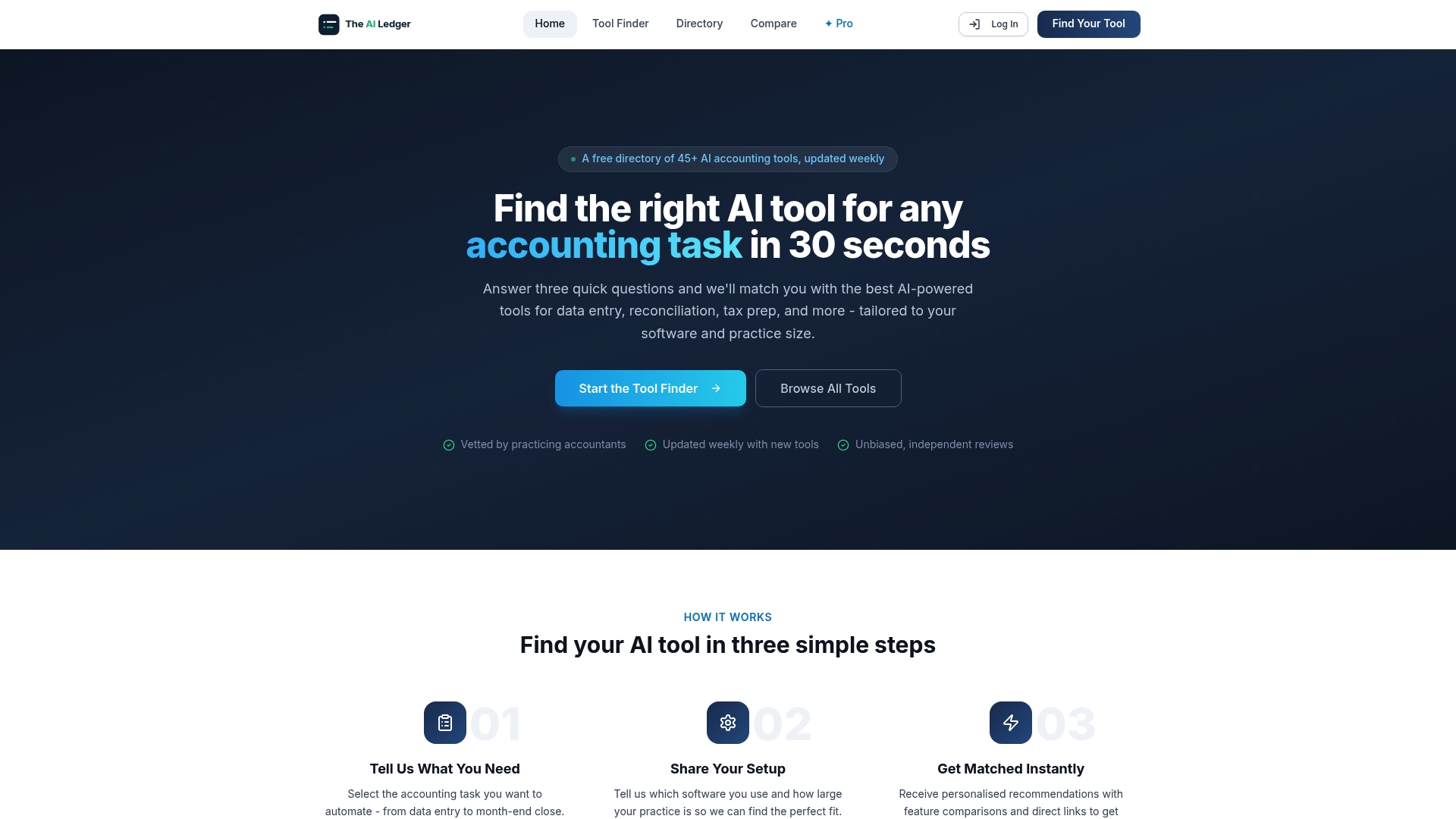
Whether you are a solo bookkeeper looking for an affordable entry point or a multi-partner firm evaluating enterprise-grade governed platforms, the Ailedger directory covers both ends of the market. You can browse top AI close tools with detailed capability breakdowns, pricing information, and honest assessments of where each tool performs best. For practices exploring document processing and reconciliation automation, the AI accounting tools directory includes options across every budget tier.
FAQ
What is an AI-native general ledger?
An AI-native general ledger is an accounting platform built from the ground up to use autonomous agents for transaction booking, reconciliation, and reporting. Unlike traditional ledgers with AI features added on, these platforms enforce accounting rules and audit trails at the point of every automated entry.
How quickly can AI tools close the books?
AI-native close agents compress the month-end close from 5–10 business days to 3 days or fewer. The reduction comes from continuous reconciliation during the period rather than a concentrated end-of-period effort.
What is "truth drift" in AI financial close?
Truth drift occurs when real-time sub-ledger data diverges from the formal general ledger during continuous accounting. Addressing it requires ongoing reconciliation between live transaction data and the posted ledger to prevent exceptions from accumulating.
Do AI close tools work with existing ERP systems?
Most enterprise-grade platforms connect via live ledger APIs with ontology-based data models, meaning they map to your existing ERP structure without requiring a full data migration. Confirm native API support before committing to any platform.
Is human oversight still required with AI close automation?
Human oversight remains essential even at 95%+ auto-booking rates. AI reallocates finance effort from manual posting to exception review and final approval, which is a governance role that requires professional judgement, not just sign-off.