Yes, payroll automation is the right next step for most small and medium businesses. It removes manual data entry and reconciliation from pay runs, cuts errors, and produces the audit trails HMRC and internal finance teams need. The trade off is a proper migration: a rushed rollout causes more disruption than the manual process it replaces.
TL;DR:
- Data cleaning and parallel testing are critical; rushing these steps often leads to pay errors and regulatory issues during migration.
- Payroll systems supporting multi-cycle, multi-entity, and contractor payments are essential for scaling operations without process rework.
- Integration with HR and accounting platforms, including real-time obligation updates and automated journal posting, maximizes automation benefits.
- Proper vendor verification requires analyzing data residency, compliance support, and support models, not just feature lists or demo presentations.
- Continuous, AI-driven payroll calculations and system integration are the future, reducing errors and providing proactive compliance monitoring.
Table of Contents
- What is payroll automation software?
- Why automate payroll: the real business benefits
- What features should payroll automation software include?
- How do you implement payroll automation without breaking pay day?
- How do you choose the right payroll automation approach?
- Payroll and accounting: how the integration actually works
- Why trust this guide, and how The AI Ledger helps you pick
- The verdict: start small, involve the right people
- What does payroll automation software actually cost?
- What goes wrong with payroll automation, and how to avoid it
- How secure is payroll data in an automated system?
- What are the main types of payroll automation software available?
- Where is payroll automation technology heading next?
- Our take on payroll automation
- Get matched to the right payroll tool in 30 seconds
- Sources
What is payroll automation software?
Payroll automation software handles the calculations, tax withholdings, payslip generation and payments that a payroll administrator would otherwise process by hand, one employee at a time. It removes manual data entry and reconciliation work by pulling hours, salary changes and benefits directly from source systems, running the calculations, and pushing the results out as payslips and bank payments, according to HiBob's overview of payroll automation.
Manual payroll still leans on spreadsheets. Someone rekeys hours from a time and attendance system, checks tax codes against HMRC notices, and reconciles the total against last month's figures before anyone gets paid. Automated systems do that same work through APIs and rules engines rather than copy and paste.
What this typically covers:
- Gross to net pay calculations, including tax, National Insurance and pension deductions
- Payslip generation and secure employee self-service access
- Statutory and voluntary payments (SMP, SSP, pension contributions, court orders)
- Real Time Information (RTI) submissions to HMRC
- Record keeping and audit logs for every pay run
Cloud platforms add a further layer: continuous compliance monitoring, live tax table updates and, increasingly, AI-native calculation engines that flag anomalies before a pay run is submitted rather than after, per Warp's description of AI native payroll tools.
Why automate payroll: the real business benefits
The case for automated payroll processing rests on four things: time, accuracy, scale and staff experience. None of them are marginal gains.
A payroll administrator running weekly cycles by hand for 40 to 60 people can lose the better part of a working day to data entry and checking alone. Automating that same run typically compresses it to an hour or two of review, freeing that person for the parts of the job that actually need judgement, like handling a leaver's final pay or a complex maternity pay calculation.

Fewer errors, better audit trails. Manual payroll is where transposed numbers and missed tax code updates creep in. Automated systems reduce processing time and simplify tax filing because the same validated data feeds every calculation, according to Lano's guide to payroll automation. Every change is logged, which matters enormously if HMRC ever queries a submission.
Key benefits at a glance:
- Scalability — adding ten new starters or switching a chunk of the workforce to contractor status shouldn't mean rebuilding your process
- Multi-cycle handling — weekly, monthly and off-cycle runs coexist without separate manual spreadsheets
- Self-service — employees pull their own payslips and P60s, which measurably cuts the "where's my payslip" queries HR fields every month end
- Compliance confidence — automated regulatory updates reduce the risk of filing errors, per ADP's payroll software overview
What features should payroll automation software include?
Not every platform needs every feature below, but a serious shortlist should be measured against this checklist before you get anywhere near a contract.
- Core calculation engine covering PAYE, National Insurance, pension auto-enrolment and statutory payments, with payslip generation and payment run scheduling built in.
- RTI-ready HMRC filing, meaning submissions go directly to HMRC on schedule without a manual export and upload step.
- HR and time integration, so salary changes, leave and clocked hours flow into payroll automatically rather than being re-typed. Practitioners consistently recommend platform-first software where HR data moves into payroll without manual reconciliation, according to Small Business's comparison of UK payroll software.
- Accounting ledger integration via API, posting payroll journals straight into your books.
- Multi-entity and contractor support if you run more than one PAYE scheme or pay a mix of employees and contractors.
- Audit logs and version history for every change made to an employee record or pay run.
- Year-end support, including P60 generation and the transition into a new tax year without a support ticket queue.
Pro Tip: Ask about year end specifically. Plenty of platforms handle weekly RTI submissions well, then leave you managing P11Ds and year end reconciliation manually because that module costs extra.
How do you implement payroll automation without breaking pay day?
Migrating payroll is not a weekend project, and treating it like one is the single most common cause of a botched first pay run. A phased approach, audit, then pilot or parallel run, then full cutover, is standard practice, with simple single-entity migrations taking days and complex multi-entity setups running into months, according to Spendesk's guide to payroll automation software.
- Audit your current process. Map every data source: the HR system, time and attendance records, pension provider files, and any spreadsheet formulas nobody has documented in three years.
- Choose your approach. Decide between an embedded API or module inside your existing HR platform, a fully managed payroll provider, or an in-house system upgrade. Each carries different implementation effort and ongoing dependency on the vendor's support team.
- Clean and migrate data. Map every field, from tax codes to pension categories, before importing. This is the stage vendors chronically underplay; in practice, data cleaning and parallel runs are the highest effort part of any migration, not the software configuration itself, per Tako's payroll and people ops product page.
- Run a parallel pilot. Process one or two full pay cycles on both the old and new system side by side, and compare every output line by line before switching off the legacy process.
Practical checklist for that pilot phase:
- Involve the payroll team who will actually run the system day to day, not just IT
- Reconcile gross pay, deductions and net pay against the legacy figures
- Confirm pension contributions match provider records exactly
- Set a realistic go-live date with a fallback plan if reconciliation throws up discrepancies
A short pilot covering one or two pay cycles with parallel running remains the most reliable way to validate outputs before full cutover, a view echoed across Spendesk's implementation guidance.
How do you choose the right payroll automation approach?
Start with three decision axes: company size and growth trajectory, payroll complexity (multiple pay cycles, contractor mix, benefits variety), and whether you need multi-country support.
Run any shortlist through this checklist:
- Does it integrate directly with your existing HR and accounting systems, or will you still be exporting CSVs?
- Where is employee data hosted, and does that satisfy your data residency requirements?
- What UK-specific compliance support is included, RTI, pension auto-enrolment, statutory payments, as standard?
- What is the support model: dedicated account manager, ticket queue, or chatbot first?
- What does total cost look like once you add implementation, per-payslip fees and support tiers together?
In the demo itself, ask pointed questions rather than sitting through a features tour: What exactly happens during migration, week by week? What is the cut-off time for submitting changes before a pay run locks? How are calculation errors flagged, before or after submission to HMRC? Can you see a live audit log, not a mock-up?
Payroll and accounting: how the integration actually works
Payroll automation only delivers its full value when the output flows straight into your books. The common pattern is payroll calculates the pay run, triggers payments, then posts journals automatically into the accounting ledger, avoiding the manual month-end reconciliation that eats a bookkeeper's afternoon. Modern platforms increasingly build this as a direct API connection so payroll journals and payment confirmations post to the ledger without a manual export step, according to Flux Payroll's platform overview.

Mapping statutory tax and employer National Insurance liabilities automatically at the point of integration considerably reduces month-end reconciliation errors, since the numbers never get manually retyped between systems. Our guide to accounting software integration covers the mechanics of that ledger connection in more depth.
For UK compliance, verify three things before you sign anything:
- RTI support is genuinely built in, not bolted on through a third-party export
- Statutory payments (SMP, SPP, SSP) calculate automatically against current thresholds
- Pension auto-enrolment assessments run every pay period, not just at onboarding
Vendors talk up compliance automation constantly, but buyers still need to verify RTI support and pension auto-enrolment workflows independently rather than taking a sales deck's word for it, per ADP's own payroll software materials.
Why trust this guide, and how The AI Ledger helps you pick
This guide draws on how payroll automation actually gets implemented, not how it's marketed. The AI Ledger runs an independent directory of 100+ AI tools for accountants and bookkeepers, each carrying an editor score that is never for sale and a last verified date, so you can see when a listing was last checked against reality.
The 30 second tool finder narrows that list down to platforms matching your specific payroll job, whether that's contractor heavy payroll, multi-entity RTI filing, or straightforward monthly runs for a 20-person team. Category guides sit alongside it for readers who want the fuller comparison before shortlisting.
The verdict: start small, involve the right people
Payroll automation delivers real gains in accuracy, speed and compliance confidence for most SMBs, but only when the migration is treated with the same care as the software selection. Run an audit of your current process first. Pilot one full pay cycle in parallel before cutover. Then use The AI Ledger's tool finder to match the result to your specific payroll complexity.
What does payroll automation software actually cost?
Pricing typically follows one of three models: per payslip (a flat fee for each employee paid each cycle), per employee per month (a subscription regardless of how many pay runs you process), or a tiered platform fee that bundles a set number of employees with add-ons for extras like pension integration or multi-entity support.
Expect implementation costs on top of the headline rate. Data migration, initial setup and training aren't always included, and providers vary wildly on what counts as "standard" onboarding versus a chargeable extra. Year-end processing, P11D generation and additional HR modules frequently sit behind a higher tier too.
The factors that move your actual bill the most:
- Headcount and growth trajectory — a platform priced for 20 employees can get expensive fast at 80
- Contractor versus employee mix — some platforms charge more per contractor than per PAYE employee
- Number of pay cycles — weekly and monthly runs on the same platform sometimes attract separate fees
- Support tier — a dedicated account manager costs more than a ticket queue, and for payroll that difference matters at year end
Get a total cost of ownership figure for at least twelve months, not just the headline monthly rate, before comparing providers against each other.
What goes wrong with payroll automation, and how to avoid it
The most common failure isn't the software itself, it's underestimating the data cleaning stage. Legacy spreadsheets accumulate undocumented workarounds, manual tax code overrides, and pension categories nobody has audited in years. Migrating that mess without cleaning it first just automates the errors alongside everything else.
A second frequent pitfall is skipping the parallel run. Teams under pressure to switch fast sometimes go live on the new system after a single test payslip rather than a full pay cycle comparison, and discrepancies only surface when someone's pay is visibly wrong.
Underestimating change management causes a third category of problems. Payroll staff who've run the same manual process for years need genuine training time, not a fifteen minute walkthrough, before they're expected to trust a new system with real pay day pressure behind them.
Finally, watch for compliance gaps that only appear at year end: a platform that handles weekly RTI submissions flawlessly can still leave you managing P60s or pension reconciliation manually if that module wasn't part of your original scope. Confirm year-end capability during procurement, not in March when you actually need it.
How secure is payroll data in an automated system?
Payroll data is among the most sensitive information any business holds: salaries, bank details, National Insurance numbers, and often home addresses. Before choosing a platform, confirm where data is hosted and whether that location satisfies your data residency obligations, particularly if the provider processes data outside the UK or EU.
Ask specifically about encryption in transit and at rest, role-based access controls (so a line manager can't see the whole company's salary data), and how long records are retained after an employee leaves. Multi-factor authentication for anyone accessing the payroll admin console should be a baseline requirement, not an optional upgrade.
Audit logging matters here too: a system that records every change to an employee's record, and who made it, gives you the evidence trail you need if a dispute or a data subject access request ever lands on your desk.
What are the main types of payroll automation software available?
The market splits broadly into three categories rather than a single "best" option for every business. Embedded modules sit inside a broader HR platform, sharing one database with employee records, which suits businesses that want payroll and HR data to stay in lockstep without separate reconciliation. Fully managed payroll providers handle the calculations and filings on your behalf, with your team submitting hours and changes rather than running the engine directly, which suits businesses without a dedicated payroll specialist. Standalone payroll platforms with open APIs sit in the middle, giving you calculation and filing automation while leaving HR and accounting integration as a connection you build or configure yourself.
AI-native entrants are pushing into this space too, offering real-time calculation and continuous compliance monitoring that flags anomalies as they happen rather than at the end of a pay cycle. That speed matters most for businesses running frequent off-cycle payments or high contractor turnover, where a batch-processed system's overnight checks arrive too late to catch a problem before payment goes out.
Rather than naming individual products here, The AI Ledger's side by side comparison tool lets you weigh options against your own criteria directly.
Where is payroll automation technology heading next?
Continuous, real-time payroll calculation is the clearest direction of travel. Instead of a single batch run before cut-off, systems increasingly calculate pay continuously as hours and changes are logged, catching errors days before submission rather than hours before.
AI-native compliance monitoring is following the same path: platforms that watch for tax table changes, pension threshold updates and statutory payment rate changes automatically, then flag the affected employees before a human ever needs to check manually.
Deeper API-native integration between payroll, HR and accounting systems is also becoming the default expectation rather than a premium feature, closing the gap between a pay run and the ledger entry it should produce. For finance teams, that shift shows up most clearly in accounting workflow automation, where payroll journals increasingly post without anyone touching a spreadsheet. Readers building a wider automation roadmap may also find Oak & Nine's guide to accounting workflow automation software useful for the technical integration patterns behind these connections.
Our take on payroll automation
The conventional advice on payroll automation focuses almost entirely on the software's feature list, calculation accuracy, tax filing speed, self-service portals, and barely touches the part that actually determines whether a rollout succeeds: the migration itself. That's backwards. Every platform on the market calculates PAYE correctly. What separates a smooth transition from a painful one is whether someone actually cleaned the data and ran a proper parallel pay cycle before cutover.
If you take one thing from this guide, prioritise the audit stage over the vendor demo. A business that spends two weeks mapping its current payroll data before evaluating software will have a far easier procurement conversation than one jumping straight into feature comparisons. The right platform for a 15-person business with no contractors looks nothing like the right platform for a 60-person business running three pay cycles and a growing freelance bench, and no amount of feature comparison substitutes for knowing which one you actually are.
Match the tool to the job, not the other way round.
— Aaron
Get matched to the right payroll tool in 30 seconds
The AI Ledger is the independent alternative to scrolling through vendor comparison pages that all say roughly the same thing about themselves. Instead of reading twelve feature lists, you answer a few questions about your payroll complexity, contractor mix and current systems, and get matched to tools that actually fit, each with an editor score that's never for sale and a last verified date so you know the review isn't stale.
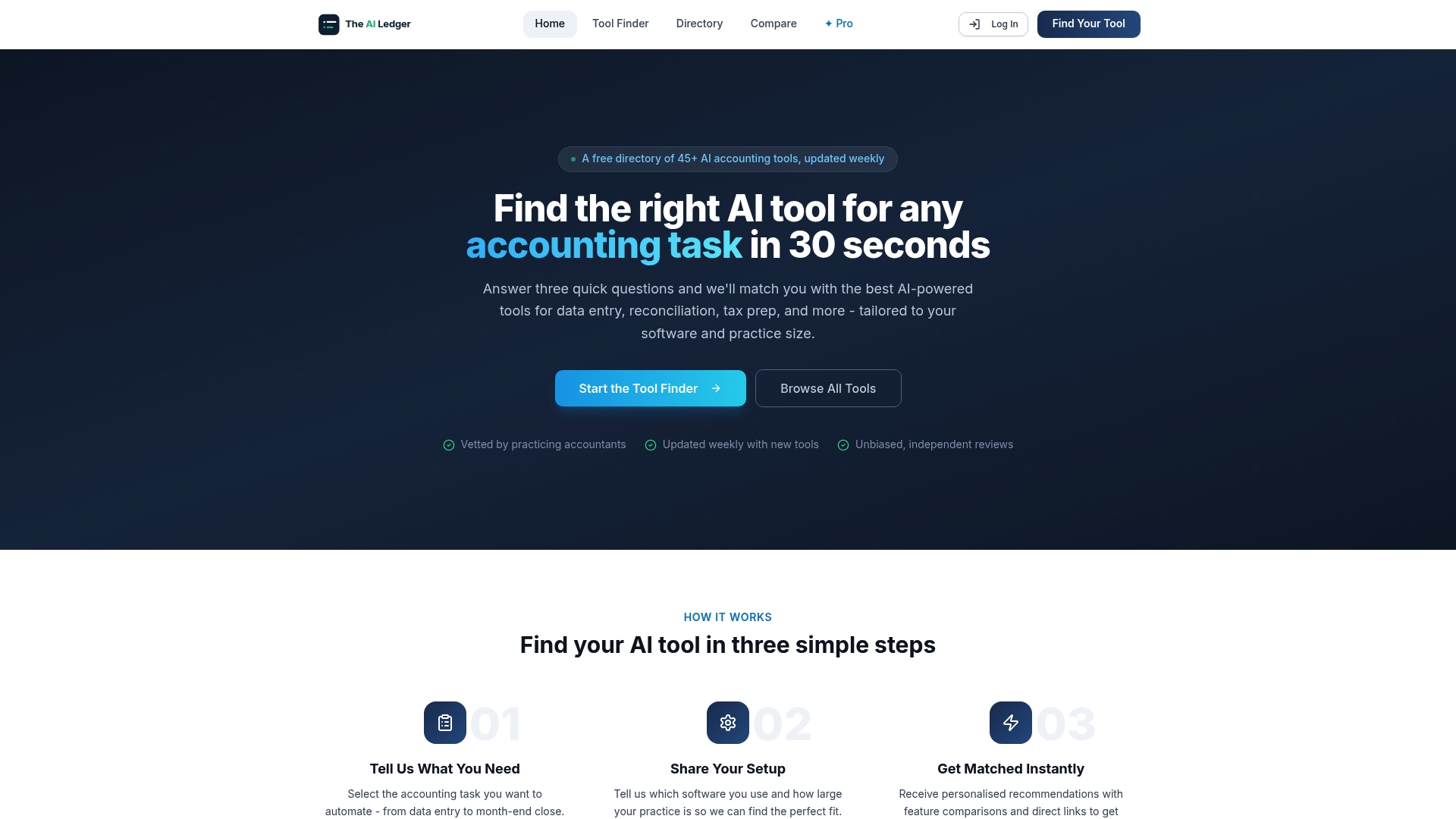
That matters most for payroll specifically, because the wrong platform choice here doesn't just waste money, it creates a migration you'll have to unwind within a year. The AI Ledger's payroll tool finder filters against your actual requirements, not a vendor's marketing copy, and every listing links through to the provider's own detail so you can compare shortlisted options side by side before booking a single demo. Start there before you take a single sales call.
Sources
- Payroll automation: Benefits, tools, and implementation
- Compare payroll software for UK small businesses
- What is payroll automation?
- Payroll software | Online payroll services | ADP