PBC request automation replaces spreadsheet lists and scattered emails with a living register that generates requests, sends reminders, captures receipts and flags overdue items automatically. It suits any recurring audit with dozens of requests or multiple client contacts, where follow-up volume currently eats hours a week. Automation coordinates the process; judgement on evidence sufficiency stays with the audit team.
TL;DR:
- Using automation to generate, remind, capture receipts, and track overdue requests can significantly reduce manual follow-up time and improve audit efficiency.
- Prioritizing a phased pilot, mapping last year's list, and establishing clear ownership are crucial for successful implementation and scale-up.
- Ensuring integration with existing systems, proper security, and data residency compliance is essential when selecting an automation tool.
- True value relies on appointing a dedicated coordinator to oversee the process, as automation supports but does not replace human judgment.
- Measuring key metrics like overdue counts and response times during the pilot determines whether to expand automation across engagements.
Table of Contents
- What does PBC request automation actually do?
- The five automations that matter most
- How to evaluate a PBC automation tool before buying
- How do you roll out PBC automation without disrupting an engagement?
- Security, data residency and compliance for PBC requests
- Why trust this framework?
- What goes wrong with PBC automation, and how to avoid it
- What successful PBC automation rollouts look like in practice
- An editorial view on where PBC automation actually pays off
- Finding the right PBC automation tool without the guesswork
- Sources
What does PBC request automation actually do?
Automation handles the coordination work that consumes junior staff time, not the professional judgement that sits with the audit team. That distinction runs through every capability worth paying for.
The core feature set looks like this:
- Template generation that turns a prior-year PBC list into this year's request set in minutes, not hours
- Reminders on a set cadence, escalating automatically when a request goes unanswered
- Secure uploads tied to a stable request ID, so a file always lands against the right line item
- Receipt metadata capture, including timestamp, source and file link, without anyone typing it manually
- Ageing and overdue queues that surface exactly which requests are late and by how long
- Escalation routing and basic pre-checks that flag obvious mismatches before a reviewer looks at anything
Static spreadsheets and email threads cause version-control problems that a living register solves by design, because every request carries a fixed ID and a single source of truth for its status. Firms running this well report noticeably lighter inboxes during fieldwork weeks, simply because reminders and status checks no longer need a human to send them.
The five automations that matter most
Most PBC automation projects fail by trying to automate everything at once. A tighter approach, drawn from practical audit preparation workflow design, breaks the job into five discrete automations. Build them in this order:
- Create. Generate templates from prior-year lists, assign a stable request ID to each item, name an owner, and set a due date before the engagement even starts.
- Remind. Set a reminder cadence based on behaviour, not a flat schedule. A client contact who always replies on day three doesn't need the same nudge as one who needs three chases.
- Capture. Record receipt metadata the moment a file lands, and mark the item with a neutral status such as "received, review pending" rather than "complete."
- Route. Send anything with a missing owner, a broken link, or an obvious mismatch to an exception queue for a manager to look at, rather than letting it sit unresolved.
- Report. Produce a status packet before fieldwork begins, and keep it updating automatically as the engagement progresses.
Pro Tip: Never let the "received" status double as "accepted." Keep the two separate in your workflow so a file that's technically present but wrong doesn't get treated as resolved.
The sequencing matters because each step depends on the one before it. Reminders without stable IDs create duplicate follow-ups. Reporting without clean receipt data just produces a status packet nobody trusts.
How to evaluate a PBC automation tool before buying
Vendor demos tend to show the same five minutes of polished workflow, so the real evaluation happens on dimensions that don't show up in a sales call. Score any shortlisted tool against these five areas: core capabilities (templates, reminders, receipt metadata), integrations with your ERPs and practice management software, security and data residency, scale across multiple entities or engagements, and reporting with a genuine audit trail.
Weighting differs by firm size. A solo practice or small firm should weight core capabilities and simplicity of setup highest, since a complex integration layer is wasted effort for a handful of clients. A mid-market or multi-entity firm should weight integrations, scale and audit trail more heavily, because the coordination burden across dozens of entities is where automation earns its keep.
Software in this space tends to cluster into three broad categories, each with a different strength profile:
| Category | Core capabilities | Integrations | Security & residency | Scale |
|---|---|---|---|---|
| Entry-level field apps | Basic templates and reminders | Limited, often manual export | Standard encryption | Single engagement |
| Practice portals | Templates, reminders, receipt metadata | Practice management, cloud drives | Firm-level controls | Multi-client, single firm |
| Enterprise platforms | Full metadata, escalation, pre-checks | ERPs, SharePoint, practice systems | Configurable residency, certifications | Multi-entity, multi-office |
Confirming these details against real listings, rather than a sales deck, is exactly what a tool comparison resource is built for.
- Ask for a sandbox before committing, not just a screen-share demo
- Check whether receipt metadata exports cleanly into your working papers
- Confirm the vendor's data residency matches your firm's policy, not just its marketing page
How do you roll out PBC automation without disrupting an engagement?
Pick one recurring engagement as a pilot rather than switching every client at once. A repeat audit with a known client contact and a stable PBC list from last year gives you a controlled test with minimal surprise, and it's the approach recommended in guidance on rolling out PBC tracking for mid-market firms.
- Configure before you launch. Map last year's PBC list to templates, connect the tool to your ERP or client's accounting system, and set your reminder cadence and escalation rules in advance, not on the fly.
- Name a single PBC coordinator. One person owns the request register end to end. Automation cannot replace this role; it only reduces the manual load the role carries.
- Build in manager review gates. Exceptions routed by the tool need a human decision point, not an automatic pass-through.
- Run a two-day completeness check before fieldwork starts. Confirm every request has either a valid receipt or a documented reason it's outstanding, and set a stop condition for what happens if it doesn't.
- Scale only after the pilot proves stable. Roll templates forward to the next engagement and start measuring outcomes properly.
AI-enabled matching against recurring PBC items now reaches match rates of 60 to 80 percent for standard, repeat requests, which means your team's attention concentrates on the 20 to 40 percent that genuinely need judgement, rather than the routine reconciliations that used to eat the same amount of time. That's the outcome worth measuring in week one of the pilot, not just at year end.
Track these metrics from the pilot onward, and revisit them when you decide whether to scale: time spent chasing per engagement, completion rate by due date, and the count of overdue items at the fieldwork start date. The finance automation metrics guide is a useful reference for setting these baselines properly.
Security, data residency and compliance for PBC requests
Client evidence often includes bank statements, payroll data and contracts, so where that evidence lives matters as much as how fast it's collected. Store sensitive documents in your firm's approved repository, and keep only a link plus limited metadata inside the automation workflow itself, unless your policy explicitly permits more.
Before signing anything, confirm:
- Encryption in transit and at rest, plus any relevant security certifications the vendor holds
- GDPR-compliant processing, with EU or UK data residency where your firm's policy requires it
- A defined stop condition so the tool doesn't keep chasing a client after a receipt has already been recorded
The Financial Reporting Council has been clear that audit quality depends on clear evidence flows, not on speed alone. A tool that misroutes a document or sends a reminder after receipt has already landed isn't a minor bug. It's a control failure that needs a human review step, not a software patch.
Why trust this framework?
This guide was put together by Aaron, who runs The AI Ledger, an independent directory of 100+ AI tools built for accountants and bookkeepers, with editorial reviews, side by side comparisons, editor scores that are never for sale, and a last verified date on every listing.
The framework draws on published guidance from the FRC, ICAEW's documentation guidance, and Deloitte's position on audit automation, alongside practical workflow design from firms already running PBC automation day to day. The recurring theme across all of it: pilot first, keep a human in every review loop, and measure outcomes before scaling.
What goes wrong with PBC automation, and how to avoid it
The most common failure isn't the software. It's treating automation as a substitute for the PBC coordinator role rather than a tool that supports it. Requests still bounce between departments when nobody owns the register, and a reminder engine just chases the wrong person faster.

A second recurring problem is status inflation. Teams mark items "complete" the moment a file lands, before anyone has actually reviewed it for sufficiency. Months later, at fieldwork, half the "complete" items turn out to be the wrong document entirely. The fix is simple: use a genuinely neutral status like "received, review pending," and never let the automation itself promote that status to "accepted."
Integration gaps cause a third class of problem. A tool that can't connect to the client's ERP or the firm's practice management software ends up creating a second, parallel list that someone has to reconcile by hand, which defeats the entire point. Before rollout, confirm the integration actually works with a live data pull, not just a claimed compatibility badge.
Finally, firms underestimate escalation fatigue. If every overdue item gets flagged with the same urgency, client contacts start ignoring the automated reminders entirely, which is worse than the manual chasing it replaced. Tiered escalation, calm on day one and firmer by day seven, keeps the reminders credible rather than noisy.
None of these are technology failures. They're process failures that automation exposes faster than a spreadsheet ever did, which is arguably its most useful side effect.
What successful PBC automation rollouts look like in practice
The firms that get the most out of automation tend to share a pattern: they start small, measure honestly, and only then expand. A mid-market firm piloting automation on a single recurring client typically maps last year's PBC list into templates first, since that step alone removes the blank-page problem that causes so many requests to go out late.

Once templates and reminder cadences are in place, the visible change shows up in overdue counts. Firms report overdue items dropping sharply within the first cycle simply because reminders go out reliably instead of depending on someone remembering to send them. The ICAEW's guidance on documentation efficiency points to the same lesson: the biggest time saving comes from spotting gaps before fieldwork starts, by checking the PBC list against the client's ERP and close files in advance, not from chasing harder once fieldwork is already underway.
Multi-entity firms tend to see the clearest payoff at scale, because a coordinator managing PBC requests across a dozen subsidiaries by email simply cannot keep pace with a properly configured escalation queue. The pattern that recurs across these rollouts is one coordinator, one register, and templates that roll forward year on year rather than getting rebuilt from scratch. A useful reference point for what this looks like operationally is this set of accounting workflow automation examples, which shows comparable coordination problems solved in adjacent finance workflows.
An editorial view on where PBC automation actually pays off
Most advice on this topic oversells the technology and undersells the coordinator role. Software can generate templates and chase reminders all day, but it cannot decide whether a bank confirmation is sufficient evidence, and it should never be configured to try. The firms getting real value from automation are the ones who treat it as a coordination layer sitting underneath human judgement, not a replacement for the judgement itself.
Where conventional advice falls short is in treating tool selection as the hard part. It isn't. The hard part is naming one person to own the request register and giving them the authority to escalate without approval from three other people first. A brilliant tool with no coordinator produces the same chaos as a spreadsheet with no coordinator, just faster.
If you're prioritising anything first, prioritise the pilot. Pick one recurring engagement, run the five automations end to end, and measure your overdue count before you sign a firm-wide contract. The tool matters less than the discipline of testing it properly before scaling it.
— Aaron
Finding the right PBC automation tool without the guesswork
Comparing PBC automation options properly means checking integrations, security posture and pricing across a market that changes every few months, which is a lot to verify manually before an engagement deadline. The AI Ledger is built to shortcut that legwork: an independent directory of 100+ AI tools for accountants and bookkeepers, each carrying an editor score that's never for sale and a last verified date so you know the listing hasn't gone stale.
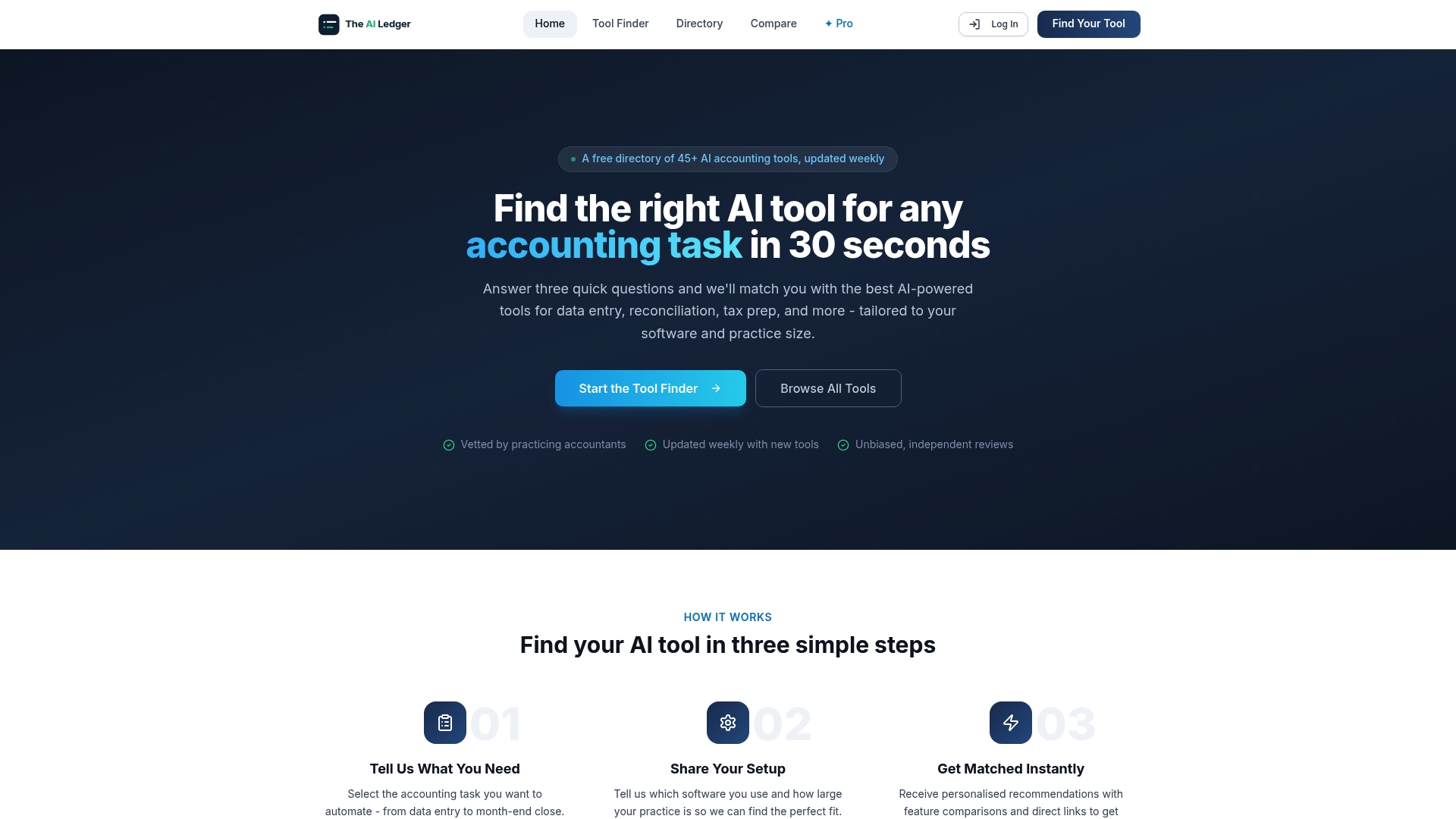
The 30 second tool finder matches your engagement type and firm size against the directory's side by side comparisons, so you're not reading five vendor websites to work out which one actually integrates with your ERP. If procurement is still a few weeks off, the free weekly Friday newsletter tracks feature and price changes across AI accounting software in plain English, which is worth reading before any tool gets locked into a contract. Run the finder before your next PBC cycle starts, not after the chasing has already begun.
Sources
- FRC: report on the quality of major local audits
- ICAEW: write it right, write it once — efficient audit documentation
- US Tech Automations: automate audit preparation checklist (2026)
- Deloitte: a new future for audit (automation guidance)
- Finofo: AI for audit prep — faster PBC responses