
Practice management software brings scheduling, clinical notes, billing and telehealth into one system so a clinic or therapy practice runs on fewer spreadsheets and less duplicated admin. For most solo therapists and small clinics, the strongest starting shortlist is WriteUpp, Cliniko and Zanda, chosen on fit to clinical workflow and clarity on GDPR and data hosting. Get that right and you should see less admin time, fewer no-shows and cleaner billing within a few months.
TL;DR:
- The choice of practice management software depends heavily on your practice size, growth plans, and specific workflow needs, with solo therapists prioritizing ease of use.
- Implementation typically takes six to eight weeks, with the slowest part being data migration and staff training, requiring careful planning and phased rollouts.
- Data hosting, GDPR compliance, and scalability vary across platforms, so verify vendor claims and matching features before committing to any system.
- Core features like scheduling, notes, billing, and telehealth significantly reduce admin time and no-shows, but their operational impact depends on proper setup and staff buy-in.
- Thorough vendor questions about data export, backup, support, and AI data use are essential to avoid surprises and ensure compliance and data security.
Table of Contents
- What is practice management software and who needs it?
- Which practice management platforms should you shortlist first?
- Comparing practice management software side by side
- What the core features actually do for your practice
- How do you choose the right practice management software?
- What does practice management software actually cost?
- What AI features should you check before you buy?
- How this shortlist was compiled
- How long does implementation actually take?
- What training and support should you expect from a vendor?
- What do reviews and case studies from real practices show?
- What goes wrong when practices adopt new software, and how do you avoid it?
- What I've learned watching practices switch systems
- A different route: comparing software tools generally
- Sources
What is practice management software and who needs it?
Practice management software, often shortened to PMS, is the system that runs the operational side of a clinical business: booking appointments, storing notes, raising invoices and, increasingly, hosting video calls for remote consultations. Zanda Health describes it as a system that helps healthcare practices streamline operations including appointments, records, billing and communications, and that framing holds whether you run a single therapy room or a six-site physiotherapy group.

It sits next to, but is distinct from, an electronic health record (EHR) or electronic medical record (EMR) system. Some platforms bundle both into one product; others keep clinical records separate from the admin layer and connect the two through an integration. Healthcode makes the useful point that PMS manages the admin aspects of a practice and is now absorbing AI features to speed up scheduling and administrative automation, a shift that is reshaping what "good" looks like in this category.
You need PMS the moment manual admin starts costing you clinical time. If you are a solo counsellor juggling a paper diary, a spreadsheet for invoices and a separate video call link for remote sessions, that is three points of failure and three places for a client's details to go missing. A decent system for accountants and bookkeepers works the same way; a practitioner tool just swaps ledgers for care records. If you are researching software adoption more broadly, our accounting software evaluation checklist covers the same evaluation logic, applied to a different back office.
Which practice management platforms should you shortlist first?
Six platforms come up again and again in UK comparative guides for therapists and clinics, and each earns its place for a different reason rather than by being universally "best." WriteUpp's own comparative guide for UK therapists puts WriteUpp, Cliniko, Zanda, Pabau and Semble on the same shortlist, and AmilisOS regularly joins that list in roundups aimed at larger clinics.
Here is the shortlist worth trialling, and why each one earns a demo:
- WriteUpp combines booking, notes and payments in one UK-built platform, and its notes templates and invoicing were designed with British therapists in mind rather than adapted from a US product.
- Cliniko is a therapist-first system with a genuinely simple interface and telehealth built in, which makes it a natural fit for solo practitioners or a two-person clinic that does not want a steep learning curve.
- Zanda takes a broader healthcare view, pairing scheduling with a client portal and billing, so it suits mixed practices that need patients to self-book and access documents online rather than just therapists working one-to-one.
- Pabau leans into CRM and marketing tools on top of the core PMS functions, which matters if your clinic is actively growing its patient list and needs follow-up campaigns, not just appointment slots.
- Semble strips things back to a lightweight, low-friction booking and notes workflow, appealing to therapists who find some of the bigger platforms over-built for a single-practitioner setup.
- AmilisOS is aimed squarely at multi-site and higher-volume medical practices, with operational features that a solo therapist would never touch but a group practice manager would rely on daily.
Beyond that core six, several other named platforms are worth knowing even if they will not suit every reader. Wawa Fertility OS is a specialist system built around fertility clinic workflows, useful if your practice has that specific clinical focus rather than general therapy or GP work. PracticePal and Medesk both offer general practice management aimed at small to mid-sized clinics, and Private Practice Software (PPS) targets independent practitioners who want a no-frills scheduling and billing tool without the CRM extras Pabau bundles in. Meddbase scales toward larger, multi-department healthcare organisations, closer to AmilisOS in ambition, while Carebit is a newer entrant focused on lean, digital-first patient management for smaller teams.
The right shortlist depends on your practice's shape more than any single feature list. A solo psychotherapist working from one consulting room has almost nothing in common, operationally, with a seven-clinic physiotherapy group, and buying the wrong scale of software is the single most common regret practitioners report after a rushed sign-up. Trial two or three from the list above that match your size and speciality before committing to a year's contract.
Comparing practice management software side by side
Reading a comparison table well means knowing which rows apply to you. A solo therapist should weight ease of use, notes quality and pricing shape heavily and can mostly ignore multi-clinic scalability. A group practice manager should flip that: scalability, integrations and data hosting architecture matter more than how quickly you personally learn the interface.
| Platform | Best for | Pricing shape | Scheduling & telehealth | Notes & billing | Data hosting / GDPR | Scalability |
|---|---|---|---|---|---|---|
| WriteUpp | Solo therapists, small clinics | Per-practitioner monthly tiers | Booking plus payments; telehealth on higher tiers | Structured notes with UK-style templates | UK-hosted, GDPR-oriented | Limited multi-site tools |
| Cliniko | Solo practitioners, two-person clinics | Per-practitioner monthly tiers | Strong built-in telehealth | Simple notes, straightforward invoicing | GDPR-compliant hosting stated by vendor | Modest, clinic-level scale |
| Zanda | Mixed healthcare practices | Per-practitioner or per-clinic tiers | Client portal plus scheduling | Notes integrated with billing workflows | Vendor states GDPR compliance | Suited to growing clinics |
| Pabau | Growth-focused clinics | Tiered, feature-based pricing | Scheduling plus CRM and marketing tools | Notes, billing and patient communication combined | Vendor states GDPR compliance | Scales with added modules |
| Semble | Therapists wanting simplicity | Per-practitioner monthly pricing | Lightweight booking, less complex telehealth | Focused, minimal notes workflow | Vendor states GDPR compliance | Best for smaller setups |
| AmilisOS | Multi-clinic, higher-volume practices | Enterprise-oriented, quote-based | Multi-site scheduling and operations | Notes and billing built for scale | Enterprise hosting arrangements | Built for multi-site groups |
Where public pricing is not published in full, that is itself a signal worth noting rather than a gap to guess around. Several vendors quote a starting price publicly but push detailed tiered costs behind a sales call, which is standard practice in this category but worth flagging before you assume the advertised figure is your final bill.
Two rows deserve extra scrutiny before you shortlist. Data hosting and GDPR compliance statements vary in how much detail vendors publish unprompted, so treat a vague "GDPR-compliant" claim on a marketing page as a starting question, not a settled answer. Scalability also hides real differences: a platform built for solo practitioners can technically add users, but the workflows underneath often were not designed for a booking desk juggling five clinicians' diaries at once.
What the core features actually do for your practice
Every practice management platform bundles a similar set of core functions, but the operational payoff of each one is easy to underrate until you have lived without it.
- Scheduling and automated reminders cut no-shows by handling confirmation texts and emails without reception staff chasing clients manually. This is usually the single biggest time saving a new PMS delivers in the first month, because missed appointments cost both revenue and clinician time that cannot be recovered.
- Clinical and therapy notes with structured templates give you an audit trail that matches what a regulator or insurer might ask for, and templated fields are far faster to complete consistently than free-text notes typed from scratch each session.
- Billing and invoicing built into the same system as your calendar removes the double entry of manually raising an invoice after every appointment, and platforms with recurring billing or insurance claim workflows save real time for practices that bill third-party payers.
- Telehealth and patient portals let clients book, complete intake forms and join video sessions without leaving one interface, which shapes patient experience as much as it shapes your admin load.
- Reporting and practice analytics turn your appointment and billing data into usable numbers: revenue by clinician, room utilisation, and no-show rates by day of week, all of which inform staffing and pricing decisions you would otherwise be guessing at.
- Integrations with accounting and calendar tools stop your billing data living in one silo and your accountant's numbers in another. OmniMD's comparison of practice systems notes that integrated single-database platforms reduce data handoffs between clinical and billing data compared with modular stacks that rely on syncing between separate tools.
Pro Tip: Before you demo any platform, list your three most repetitive weekly admin tasks and ask the vendor to show you exactly how their system handles each one, live, rather than accepting a generic feature tour.
The integration point matters more than it first appears. A modular stack, where your PMS, accounting software and calendar are three separate products stitched together with connectors, gives you flexibility to swap one piece out later. But it also creates more points where data can fall out of sync, particularly between clinical scheduling and invoicing. An integrated platform reduces that reconciliation risk at the cost of some flexibility, and which trade-off suits you depends on how tightly your billing already follows your appointments. If you already run structured workflows elsewhere in your business, our guide to building accounting workflow templates covers the same logic of standardising repeatable processes.
How do you choose the right practice management software?
Choosing well starts with an honest read of your own practice, not a feature checklist copied from a review site. A solo therapist needs simplicity and clean notes; a five-site clinic needs scalability and administrator controls that a solo tool was never built to offer.
Work through this checklist before booking your first demo:
- Confirm your practice size and growth plans for the next two years, not just today.
- List the regulatory recordkeeping requirements your clinical body imposes.
- Identify which existing tools (accounting software, calendar, payment processor) must integrate cleanly.
- Decide whether telehealth is essential now or a "nice to have" for later.
- Set a realistic monthly budget per practitioner, including likely add-on costs.
Once you are on a demo call, ask questions that force a concrete answer rather than a marketing line. These ten tend to separate a genuinely solid platform from one that sounds good on a sales page:
- Where exactly is patient and client data hosted, and in which country?
- What happens to my data if I cancel my subscription, and in what format can I export it?
- How often are backups taken, and how would a restore actually work if I needed one?
- What is your uptime guarantee, and do you publish a service level agreement?
- Who processes data on your behalf, and do you have signed data processing agreements with them?
- How is training delivered, and is it included or charged separately?
- What does onboarding actually involve, and how long does migration from my current system take?
- Are there transaction fees on payments processed through the platform?
- How does pricing change as I add practitioners or a second site?
- What support channels exist outside standard office hours?
Treat certain answers as a hard stop rather than a minor concern. No clear data export option, pricing that only ever comes "on request" with no published starting figure, or a vendor unable to produce GDPR documentation on request are all reasons to walk away from a pilot before you have invested weeks migrating records into it.
What does practice management software actually cost?
Pricing in this category almost always follows one of two shapes: per-practitioner monthly pricing, common among therapist-focused tools like WriteUpp and Cliniko, or per-clinic tiered pricing with feature bands, more typical of platforms like Pabau and AmilisOS that bundle CRM or multi-site tools into higher tiers.
Budget for costs beyond the headline monthly fee:
- Setup and migration fees for moving historical client records and notes from your previous system, which some vendors include and others charge separately.
- Training time, both the vendor's onboarding sessions and the hours your team spends learning the new workflow, which is a real cost even when the training itself is free.
- Transaction fees on card payments processed through the platform, typically a small percentage per transaction that adds up faster than practitioners expect.
- Add-on modules such as telehealth or advanced reporting that sit outside the base tier on some platforms.
Cloud SaaS deployment, which is how nearly every platform on this shortlist operates, shifts hosting, backup and security patching onto the vendor, which suits practices with no in-house IT support. A rare on-premise or self-hosted setup puts that burden back on you, along with the cost of maintaining it, and is now unusual outside larger multi-site organisations with dedicated IT staff.
To calculate a realistic first-year total cost of ownership, add twelve months of subscription fees, one-off migration and setup costs, estimated training hours valued at your team's time, and a buffer for transaction fees based on your typical monthly card revenue. That figure is almost always higher than the advertised monthly price alone, and knowing it upfront avoids an unpleasant surprise three months in.
What AI features should you check before you buy?
AI has moved into practice management software faster than most other admin categories, showing up as note-assist tools that draft session summaries, appointment triage that flags likely no-shows, and automation that handles routine admin like reminder sequences. Healthcode's overview of the category notes that PMS is increasingly absorbing AI features to speed up scheduling and administrative work, a trend accelerating across the whole sector rather than confined to one vendor.
The check that matters most: before trusting any AI feature with clinical notes, confirm in writing whether patient data is used to train the underlying model, or whether it is processed and discarded. Vendors are increasingly offering AI features, but buyers must verify where models actually process data and whether personal health information ends up feeding model training rather than staying within your account.
That distinction has real consequences. A model trained on aggregated client data, even anonymised, raises questions your regulatory body may ask about later, and "the AI does it automatically" is not an answer that satisfies a data protection audit. Run through this short checklist before enabling any AI feature: ask where the model runs (on the vendor's own infrastructure or a third-party processor), request the signed data processing agreement covering that AI feature specifically, confirm the data retention and deletion policy for anything the AI touches, and ask what happens to draft notes an AI produces but a clinician never approves. If a vendor cannot answer these plainly, treat the AI feature as unproven rather than assuming it is safe by default.
How this shortlist was compiled
This guide's shortlist rests on three signals: genuine feature fit for healthcare and therapy workflows, clarity (or its absence) on GDPR and data-hosting terms, and real presence in UK practice use cases rather than generic international listings. Where a vendor's public pages left a gap, that gap is flagged rather than filled with a guess.
The AI Ledger built this comparison with the same editorial discipline it applies across its main directory of over 100 AI tools for accountants and bookkeepers: every listing there carries an independent editor score that is never for sale, alongside a last verified date so readers know how current the review is. Side-by-side comparisons and a 30-second tool finder help practices and firms match software to a specific task rather than choosing on brand recognition alone, and that same logic drove the shortlist and evaluation criteria used throughout this article.
This piece is written by Aaron, drawing on the same vendor-research standards The AI Ledger applies to its accounting software reviews.
How long does implementation actually take?
Most practices underestimate implementation time by weeks, not days. A realistic timeline runs in three phases: setup and data migration (typically two to four weeks, depending on how many years of client records need transferring), parallel running where you keep your old system live as a backup (one to two weeks), then full cutover.

Migrating clinical notes is usually the slowest part, since structured data like appointments and invoices imports far more cleanly than free-text historical notes, which often need manual review. Build your rollout around your quietest clinical period rather than launching mid-way through a busy month, and confirm with the vendor exactly what migration support is included before you sign, since "we support migration" can mean anything from a self-service export tool to a dedicated onboarding specialist doing the work with you.
Plan for a full return to normal productivity to take six to eight weeks from first login, not from go-live day. Staff need time to build the new workflow into muscle memory, and reception teams in particular tend to revert to old habits under pressure unless the new system is genuinely faster for the tasks they do most often.
What training and support should you expect from a vendor?
Training quality varies more between vendors than almost any other factor on this shortlist, and it rarely shows up in a feature comparison. Some platforms, particularly UK-focused tools like WriteUpp and Cliniko, include structured onboarding sessions and searchable help documentation as standard. Others treat training as a paid add-on, which changes your true first-year cost meaningfully if you have several staff members to bring up to speed.
Ask specifically how training is delivered: live video sessions with a real person, pre-recorded modules, or written guides only. A solo therapist can often self-teach from documentation, but a reception team handling a shared diary across multiple clinicians benefits far more from live training that covers their specific daily workflow, not a generic product tour.
Ongoing support matters just as much as onboarding. Confirm what support channels exist outside standard office hours, since a billing error or a scheduling clash rarely waits for a vendor's nine-to-five. Platforms aimed at larger, multi-site practices like AmilisOS and Meddbase typically offer more robust dedicated account management, reflecting the higher stakes of downtime across several locations, while smaller therapist-focused tools tend to rely more on ticketed email support and community documentation.
What do reviews and case studies from real practices show?
Third-party review platforms like Capterra and G2 carry meaningful review volumes for most of the vendors on this shortlist, and the pattern that emerges across them is consistent: practitioners praise ease of use and responsive support far more often than they praise any single flashy feature. Complaints, where they appear, cluster around pricing changes after initial sign-up and migration friction when moving historical records from a previous system.
Vendor-published case studies are worth reading critically rather than at face value, since a vendor naturally selects its best examples. Still, patterns across multiple case studies from similarly sized practices are informative. A single-therapist case study praising simplicity tells you little if you run a four-site clinic, and a multi-site success story from a large medical group tells a solo practitioner even less. Match the case study to your own practice's scale before drawing conclusions from it, and treat a glowing testimonial with no comparable practice size to yours as marketing rather than evidence.
What goes wrong when practices adopt new software, and how do you avoid it?
The most common failure is not choosing the wrong platform. It is under-planning the migration and rollout around it. Practices that pick a strong system but rush the switch often end up worse off in month one than they were on their old spreadsheet-and-diary combination, purely from lost data and confused staff.
Watch for these recurring pitfalls:
- Migrating incomplete data because historical notes were exported in a format the new system cannot read cleanly, leaving gaps in client history.
- Skipping staff buy-in by choosing software top-down without involving the reception or admin staff who will use it daily, which breeds quiet resistance and reversion to old habits.
- Underestimating the learning curve for clinicians who are confident with clinical work but less comfortable with new software interfaces.
- Ignoring data portability at sign-up, only to discover at renewal time that switching away means losing years of structured notes.
Avoiding these comes down to sequencing, not luck. Migrate one workflow at a time rather than everything at once, keep your old system accessible as a reference for the first month, and build in a genuine feedback loop where staff can flag friction points in week one rather than three months later when habits have already hardened around workarounds.
What I've learned watching practices switch systems
The practices that adopt new software smoothly almost never do it all at once. They pick one workflow, usually scheduling since it is the most visible daily pain point, get that solid, then layer in notes and billing once staff trust the system.
Appointing one internal champion, someone who genuinely likes the new tool and troubleshoots small issues before they become team-wide frustrations, matters more than any vendor training session. The friction that kills adoption is rarely the software itself. It is a single confused reception shift in week two that convinces the whole team the old way was easier, when actually nobody had learned the new way properly yet.
Start narrow, get one workflow right, and expand from there. It is a slower start but a far more durable one.
— Aaron
A different route: comparing software tools generally
Everything above concerns healthcare and therapy platforms specifically, and WriteUpp, Cliniko, Zanda and the rest remain the right comparison set for that decision. But many practices researching PMS are also accountants, bookkeepers or practice managers evaluating software more broadly, often for the finance side of the same business.
That is where The AI Ledger fits, as a different kind of resource rather than a rival to any clinical platform above. It is an independent directory of over 100 AI tools built specifically for accountants and bookkeepers, covering tasks like data entry, bank reconciliation, month-end close, tax preparation and payroll. Every listing carries an independent editor score that is never for sale, alongside a last verified date so you know the review reflects current pricing and features rather than something written a year ago.
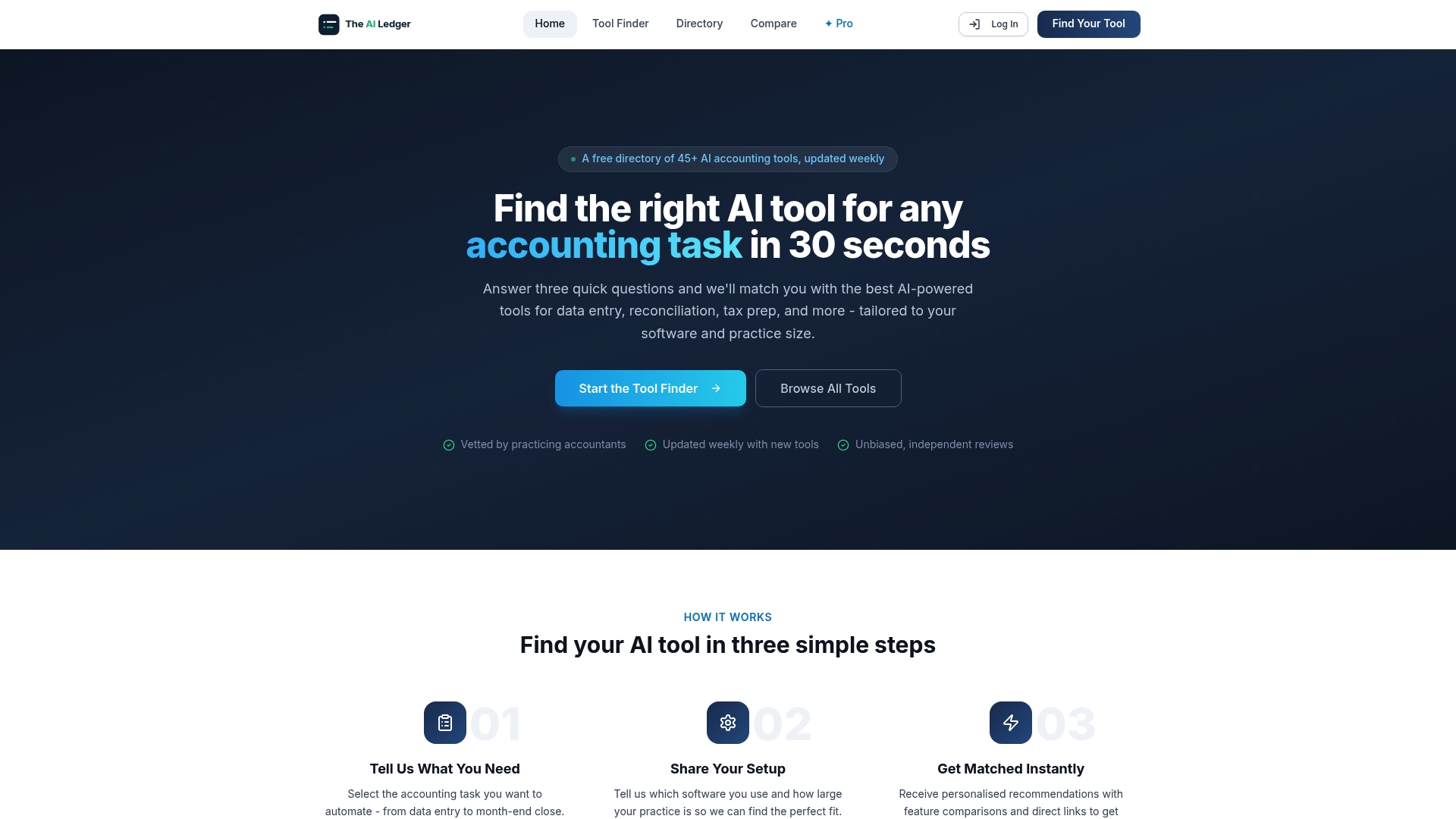 If your practice runs its own books, or you manage finance for several clinics, The AI Ledger's side-by-side comparisons and 30-second tool finder do for accounting software what this guide has just done for practice management: strip out the guesswork before you commit. The free weekly Friday newsletter tracks new AI accounting tools, feature changes and pricing shifts in plain English, so you are not left discovering a price rise after your renewal lands. Head to The AI Ledger's directory and run your practice's accounting workflow through the tool finder to see which platforms are worth a closer look.
Sources
- What is Practice Management Software - Zanda Health
- What's practice management software? - Healthcode
- Best Practice Management Software for Therapists in the UK (2026 Guide)
- 7 Best Practice Management Software Compared (2026) - OmniMD